


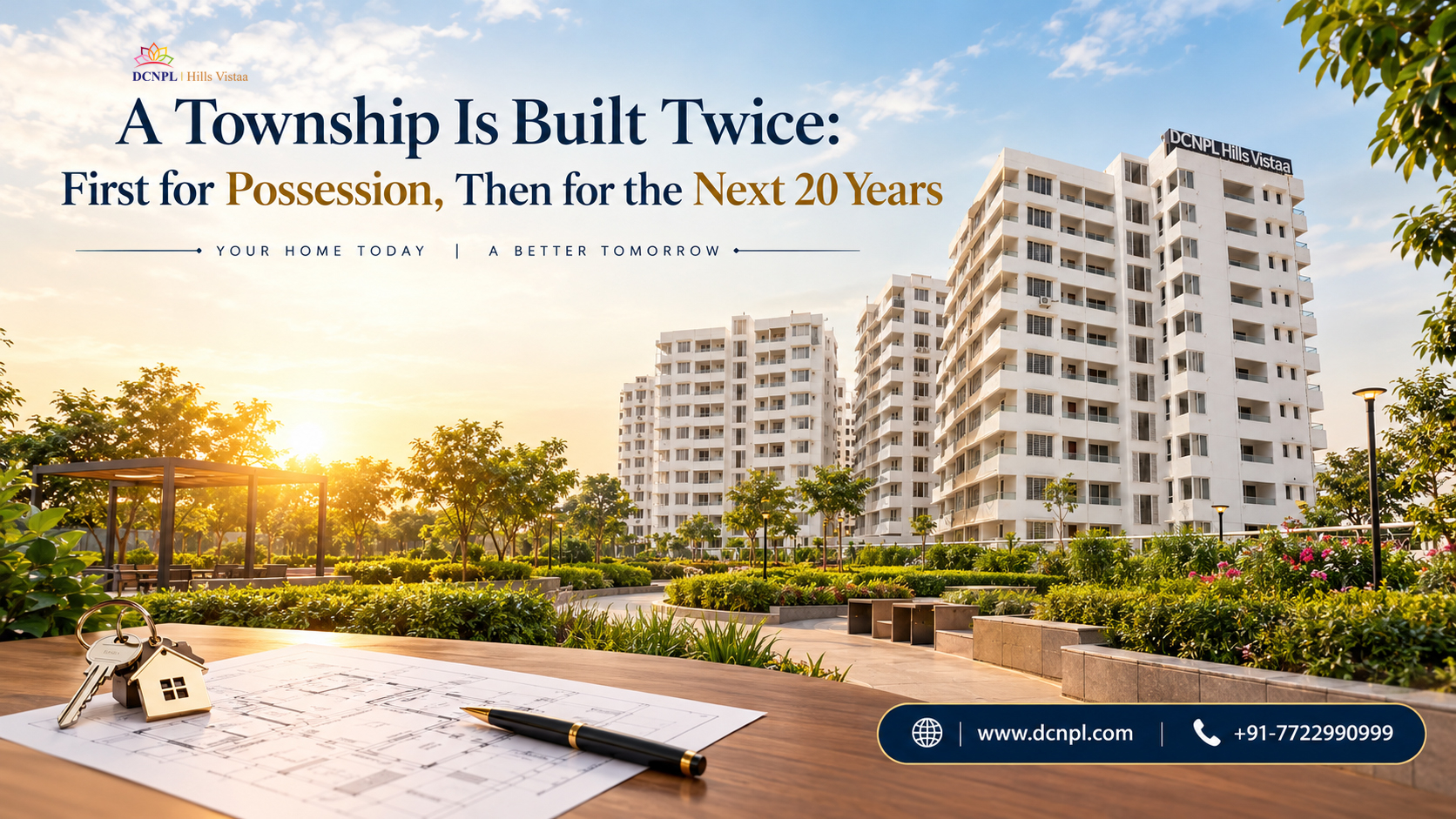
A residential township may look complete when its buildings are ready, roads are laid and residents begin moving in. But the real test of residential township development starts after possession. Water systems must keep working, drainage must handle changing conditions, common areas need regular care and infrastructure must remain functional as the community grows older.
This leads to an important question for developers, planners and homebuyers: is a township being designed only for handover, or for the decades of everyday life that follow?
The first stage is about creating the physical development. The second is about ensuring that its buildings, shared spaces and essential services continue to serve residents effectively. Both stages matter, and the decisions made during planning and construction can influence the work required long after residents move in.
Table of Contents
- Why Is a Township Built Twice?
- What Possession Does Not Tell You
- Infrastructure That Must Work Every Day
- Water Supply and Drainage Planning
- Construction Quality and Durability
- Long-Term Maintenance Planning
- Roads, Open Spaces and Common Areas
- Designing for Changing Needs
- A Homebuyer's Township Checklist
- The Developer's Role Beyond Construction
- Conclusion
- Frequently Asked Questions
1. Why Is a Township Built Twice?
A township is often judged by what people can see: residential buildings, landscaped areas, entrance features, internal roads and advertised amenities. These elements influence first impressions, but they represent only part of the development.
The less visible systems are equally important. These include water distribution, wastewater arrangements, stormwater drainage, electrical infrastructure, service access and the processes used to maintain shared facilities.
The first build creates the physical environment. The second happens through years of operation, inspection, maintenance, repair and adaptation. In that sense, a well-planned residential township must be considered both a construction project and a long-term living environment.
For example, a road may look complete at handover, but its long-term performance also depends on its design, construction, drainage, usage and maintenance. Similarly, a landscaped space can improve everyday living only when its planting, irrigation and upkeep are managed appropriately.
This is why township infrastructure planning should consider not just how a development will be delivered, but how it will function after residents begin using it every day.
2. What Possession Does Not Tell You
Possession is an important milestone, but it does not by itself explain how a residential community will perform over the next two decades. Buyers need to understand the difference between a completed home and a properly planned, operated and maintained development.
Several questions deserve attention beyond the handover date:
- Are water supply and drainage arrangements clearly documented?
- Are common facilities operational, or are some still proposed?
- Who is responsible for maintaining shared infrastructure?
- How are repairs, inspections and recurring maintenance handled?
- Are maintenance charges and responsibilities explained in writing?
- Can residents access the information needed to report service issues?
These questions are relevant whether someone is purchasing a home in a large township or a smaller residential development. The aim is not to assume that problems will occur, but to understand whether practical systems exist to prevent avoidable issues and address them when they arise.
A reliable residential property development process should make the distinction between construction completion, service readiness and ongoing management clear.
3. Infrastructure That Must Work Every Day
The quality of township living depends heavily on infrastructure that residents may rarely notice when everything works as intended. These systems support ordinary routines, from reaching the front gate to receiving water and using shared facilities.
Water Supply and Distribution
A residential development needs a planned approach to water demand, supply connections, storage where required and distribution. The design must suit the development's requirements and applicable local conditions. Where relevant, water conservation measures can also be considered.
Electrical Infrastructure
Electrical distribution, lighting in shared spaces and access to service equipment require appropriate planning. Safe operation also depends on inspections, qualified maintenance and compliance with applicable electrical requirements.
Wastewater and Drainage Systems
Wastewater management and stormwater drainage serve different purposes, but both need to be coordinated with the site's layout and levels. Poor coordination can create operational difficulties and expensive rework, while regular inspection helps identify blockages, deterioration or other maintenance needs.
Internal Roads and Access
Internal roads should support the movement expected within the development. Pedestrian access, parking, service vehicles and emergency access should be considered as part of the overall layout. Their long-term condition also depends on usage, drainage and maintenance.
Effective residential infrastructure planning brings these elements together instead of treating them as unrelated construction tasks.
4. Water Supply and Drainage Planning: Small Details, Lasting Impact
Few infrastructure systems influence everyday comfort as directly as water supply and drainage. A township may have attractive buildings and well-designed open spaces, but its daily operation still depends on essential services functioning reliably.
Water management in residential townships begins with estimating demand and understanding the available supply arrangements. Storage, distribution, maintenance access and measures for responsible water use should be assessed according to the project's design and applicable requirements.
Drainage planning deserves similar attention. Ground levels, paved surfaces, landscaped areas and road layouts influence how rainwater moves across a site. Drainage provisions should be designed for relevant local conditions and maintained to keep intended flow paths functional.
Where suitable, rainwater harvesting and other water-conservation measures may form part of a broader resource-management strategy. Their design and expected performance should be assessed on the basis of site conditions, technical feasibility and local requirements.
Buyers can ask whether the project has clearly documented arrangements for water supply, wastewater handling and stormwater management. They can also inspect accessible areas during a site visit and seek clarification about responsibilities after possession.
Good planning cannot eliminate every operational issue, but it can provide a more dependable foundation for long-term township management.
5. Construction Quality and Durability: Beyond the First Impression
Construction quality is often assessed through visible finishes, paint, flooring, fittings and the appearance of common areas. These are important considerations, but a broader assessment also considers workmanship, specifications, testing, documentation and the condition of less visible components.
Construction quality is influenced by material selection, design coordination, construction methods, site supervision and quality-control procedures. The appropriate measures differ depending on the component and its intended function.
A practical quality process may include:
- Following approved drawings and applicable technical specifications.
- Checking materials against the required specifications.
- Conducting relevant inspections and tests at suitable stages.
- Documenting identified defects and their corrective actions.
- Maintaining records needed for operation, maintenance and handover.
A durable development is not simply one that looks new on possession day. It is one in which components have been appropriately designed and installed, and where inspection and maintenance can be carried out throughout their service life.
Buyers should review the available specifications, agreements and handover documentation rather than relying only on visual appearance or general marketing statements.
6. Long-Term Maintenance Planning: The Work That Continues After Handover
Every residential development needs some form of ongoing maintenance. The exact requirements depend on its size, facilities, construction, equipment and management arrangements. Planning for these requirements early can make responsibilities clearer and help avoid preventable deterioration.
Long-term township maintenance can include routine cleaning, inspections, servicing, repairs, landscaping, lighting maintenance and the upkeep of shared infrastructure.
Preventive Maintenance Instead of Waiting for Failure
Preventive maintenance involves checking and servicing relevant components before a problem becomes a major disruption. Depending on the equipment and system, this can include scheduled inspections, cleaning, testing and timely replacement of worn parts.
Clear Responsibilities and Reporting
Residents should understand whom to contact about common-area concerns, service interruptions and repair requests. Clear reporting channels and defined responsibilities can help management teams record issues, prioritise work and communicate progress.
Planning for Future Repair Costs
Some components need regular servicing, while others may require substantial repair or replacement after years of use. A realistic maintenance approach considers recurring costs as well as foreseeable future work.
This is an important part of lifecycle planning in residential construction. It encourages decision-makers to consider not only the initial cost of a component, but also its expected upkeep, accessibility, durability and eventual replacement requirements.
Buyers should ask how maintenance charges are determined, which facilities they cover and how responsibilities are allocated under the applicable agreements and rules.
7. Roads, Open Spaces and Common Areas Need a Long-Term Plan
Shared spaces help shape the everyday experience of township living. Roads, pedestrian paths, landscaped areas, parks and common facilities need to remain accessible, usable and appropriately maintained.
Landscaping, for example, involves more than planting trees and shrubs. Plant selection, irrigation where needed, soil conditions, pruning and ongoing care influence how the space develops over time. Similarly, outdoor lighting and pedestrian paths need suitable inspection and maintenance.
Common facilities also have operating requirements. Depending on the development, these may involve cleaning, servicing, safety checks, equipment maintenance and management of access.
It is important to distinguish between facilities that are complete and operational, facilities that are under development and facilities that are only proposed. Buyers should verify these details in project documents and written commitments.
A thoughtful township development plan considers how shared spaces will be used and maintained, not just how they will appear in initial project visuals.
8. Designing for Changing Needs Over the Next 20 Years
A residential community does not remain static. Families change, equipment ages, service demands evolve and expectations about convenience may shift. A township planned only around immediate needs can face avoidable difficulties when these changes occur.
Future-ready township planning considers which systems may need inspection, upgrades or adaptation over time. It also recognises that future requirements cannot all be predicted accurately.
Accessible Service Infrastructure
Utility routes, inspection points and equipment areas should be designed so authorised personnel can access them for maintenance. Appropriate access can reduce disruption when repairs are necessary.
Resource Efficiency
Water conservation, energy-efficient equipment and suitable lighting may help manage resource use when selected and operated appropriately. Their actual benefits depend on design, usage patterns and maintenance.
Adaptable Shared Spaces
Shared spaces should respond to the intended residents and the development's design. Clear circulation, usable open areas and practical access to facilities can support a range of everyday needs.
Documentation for Future Management
Accurate drawings, equipment details, maintenance instructions and handover records can help future facility managers understand the systems they are responsible for operating.
These measures do not guarantee that a township will remain unchanged or maintenance-free. Instead, they help create a more practical basis for managing change and maintaining services.
9. A Homebuyer's Township Checklist: Questions Worth Asking Before You Buy
If you are evaluating a residential township, look beyond the sample apartment, entrance design and advertised amenities. A few practical questions can help you understand how the development is planned to function after possession.
Infrastructure and Essential Services
- What are the documented arrangements for water supply and distribution?
- How are wastewater and stormwater drainage managed?
- What are the arrangements for electrical services and common-area lighting?
- Are internal roads, access routes and relevant service areas complete?
Maintenance and Management
- Who will manage the shared areas after handover?
- What do the maintenance charges cover?
- How can residents report maintenance issues?
- Are inspection, servicing and repair responsibilities documented?
Construction and Documentation
- Can the relevant approvals and property documents be verified?
- Do the written specifications match the promised features?
- Which amenities are operational and which are planned for later?
- What handover records and maintenance instructions will be provided?
Buyers should verify the applicable project registration, approvals, title and contractual terms through the appropriate official records and qualified professionals. The specific checks depend on the project's location and legal requirements.
For more practical guidance, read DCNPL's article: Before You Buy a Flat in Indore, Check These 7 Things on Google Maps That Property Brochures Will Not Tell You .
10. The Developer's Role Beyond Construction
A developer's decisions during planning and construction can influence how easily a residential development can be operated and maintained. Coordinating building layouts, roads, utilities and shared facilities requires an understanding of how different systems interact.
Effective residential township development involves more than completing individual structures. It requires attention to design coordination, construction execution, service readiness and documentation for the next stage of the development's life.
DCNPL identifies residential township development, property development and infrastructure development among its areas of work. Its wider engineering and construction focus makes infrastructure coordination an important subject when discussing the long-term performance of residential communities.
Learn more about the company and its areas of work on the official DCNPL website. You can also explore more articles on residential property, township planning and infrastructure .
For prospective buyers, the key principle remains the same: evaluate each development on its actual planning, documented specifications, available facilities, maintenance arrangements and verified project information.
Conclusion: A Township's Real Story Begins After Possession
The completion of buildings marks an important milestone, but it is not the end of a township's development story. Over the years, infrastructure must be operated, common spaces must be maintained, equipment must be inspected and the needs of residents must be managed.
This is why long-term township planning deserves attention from the earliest design stages. Coordinated infrastructure, sound construction practices, clear maintenance responsibilities and practical handover documentation can help create a stronger foundation for everyday living.
For homebuyers, the lesson is straightforward: do not evaluate a residential township only by how it looks on possession day. Understand how its essential services are planned, what responsibilities continue after handover and how the development is intended to be maintained.
A township is built once for possession, but its quality is experienced every day for years afterward. The more carefully that second stage is considered, the better informed developers and homebuyers can be about the long-term needs of a residential community.
If you are exploring residential property development or township planning, visit DCNPL to learn more about its real estate, residential township and infrastructure-related work.
Frequently Asked Questions (FAQs)
1. Why does a residential township need long-term maintenance planning?
Long-term maintenance planning helps identify recurring service needs, schedule inspections, manage repair budgets and maintain shared infrastructure such as roads, drainage, lighting and common areas.
2. What infrastructure should buyers check before purchasing a home in a township?
Buyers should review water supply arrangements, drainage, electrical systems, internal roads, access, waste management, shared facilities and the maintenance responsibilities documented for the project.
3. How does water management affect township living?
Water management includes supply, storage where applicable, distribution, wastewater handling and stormwater drainage. Proper planning supports reliable services and helps manage runoff and waterlogging risks.
4. Who is responsible for maintaining a residential township after possession?
Responsibilities depend on the project documents, applicable law, handover arrangements and the management structure. Duties may involve the developer, facility manager, association or other designated parties.
5. Can good infrastructure planning improve the long-term value of a property?
Well-planned and properly maintained infrastructure can support usability, resident satisfaction and the condition of a development. Property value also depends on location, demand, market conditions, legal status and many other factors.
6. What is lifecycle planning in residential construction?
Lifecycle planning considers how building components and shared infrastructure will be inspected, operated, maintained, repaired and eventually replaced over their useful lives.
7. What is the difference between possession and a well-managed township?
Possession marks the handover of a home under the applicable terms. A well-managed township also requires dependable services, clear maintenance responsibilities, regular inspections and effective management of shared spaces and infrastructure.
About DCNPL: DCNPL works across areas including real estate, residential township development, infrastructure development and engineering-related construction activities. Visit www.dcnpl.com to learn more.
